

Why Routine Matters for Dogs During the Holidays
 When decorations appear and schedules shift, your dog's predictable rhythm becomes their lifeline — here's how to protect the routines that keep them grounded.
Dogs thrive on predictability. They know breakfast happens at 7 AM. Walks come after. Dinner arrives at 5 PM. Bedtime is 10 PM. This rhythm creates security.
Then the holidays hit. Suddenly, you're sleeping in, skipping walks to prep for guests, and feeding meals late because you're cooking all day. Your dog's entire world feels unstable.
This isn't about being rigid or sacrificing your holiday fun. It's about recognizing that routine is your dog's emotional anchor. When everything else changes — decorations appear, strangers visit, schedules shift — maintaining core routines keeps them grounded.
We're showing you which routines matter most and how to protect them even during holiday chaos.
Protect the Schedule
Your dog's daily schedule provides structure that reduces anxiety. During holidays, this structure becomes even more critical as a counterbalance to all the other changes happening.
Morning Routines Set the Tone
How your dog starts their day affects their entire mood. A rushed, chaotic morning creates a stressed dog. A calm, predictable morning builds resilience for whatever the day brings.
Wake up at your normal time even on days off. Yes, sleeping in sounds appealing, but your dog's bladder doesn't care about your vacation plans. They need to go out at their usual time.
Feed breakfast on schedule. Hunger compounds stress. A dog worrying about when food will appear is already anxious before anything else happens.
Take your morning walk at the regular time. This is non-negotiable. The walk provides physical exercise, mental stimulation, and bathroom relief — three pillars of dog wellbeing.
For active dogs who need more than a basic walk, our workout collection includes gear that makes exercise easier to maintain during busy seasons. A personalized water bottle for your morning walks or a custom yoga mat for home exercise keeps routines accessible.
Meal Times Are Sacred
Dogs have internal clocks incredibly attuned to feeding schedules. They know when meals should happen down to the 15-minute mark. Disrupting this creates anxiety and potential digestive issues.
Keep feeding times consistent within 30 minutes of the normal schedule, even during parties or travel. If dinner is normally 5 PM and you're hosting guests, feed your dog at 5 PM anyway. Your guests will survive waiting a few minutes while you handle pet care.
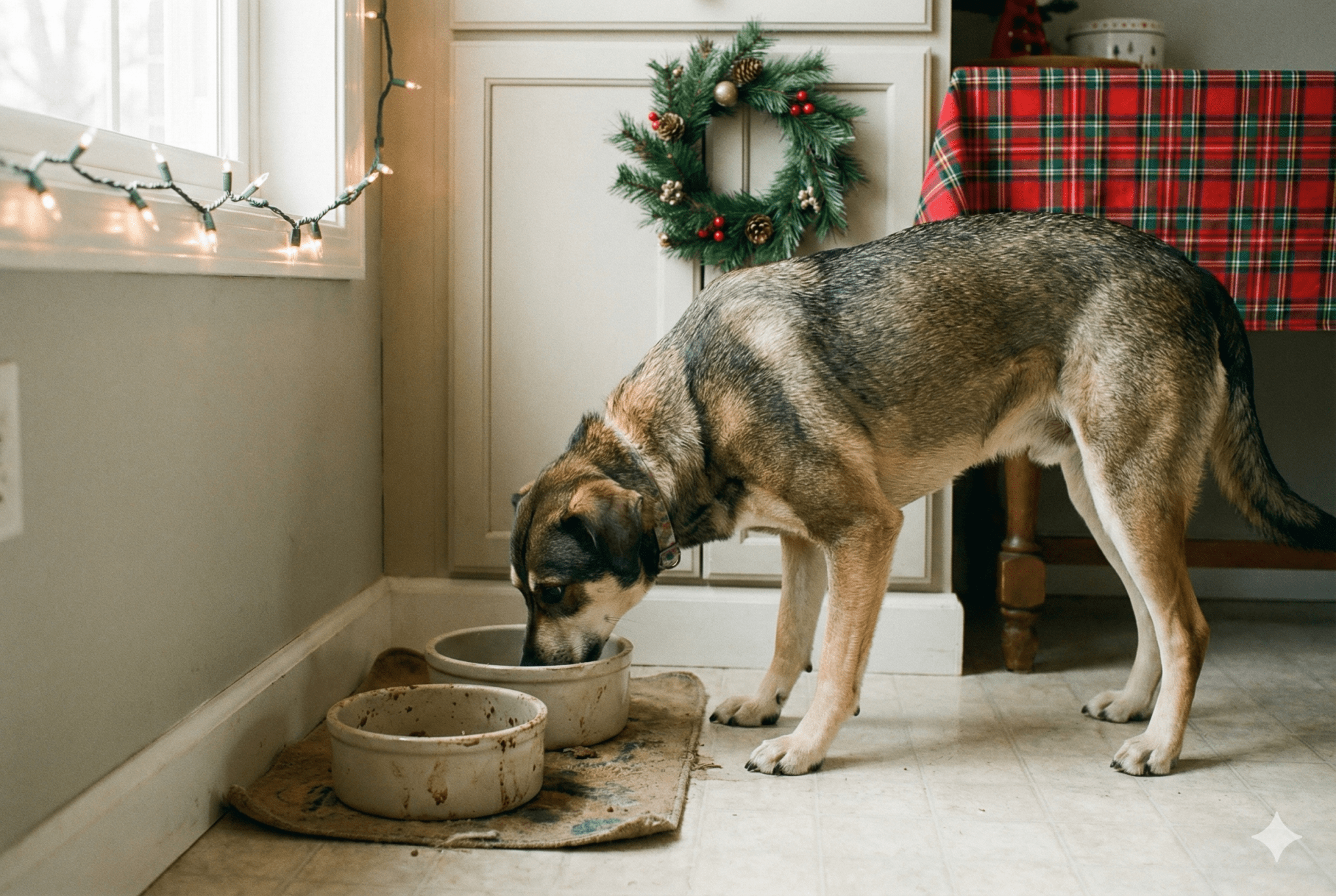
Feed in the same location using the same bowls. Changing feeding spots signals instability. Your dog wonders what else might change.
Don't alter diet during holidays. Stress already affects digestion. New foods compound the problem. Stick with their regular food in regular amounts.
Pro tip: If you're traveling with your dog, bring their regular food and bowls. A personalized feeding mat from home makes unfamiliar spaces feel more secure.
Walking Schedule Stability
Walks aren't just bathroom breaks. They're exercise, stimulation, stress relief, and bonding time rolled into one activity. Skipping or dramatically altering walk schedules creates pent-up energy and increased anxiety.
-
Maintain walk frequency. If your dog normally gets three walks daily, they need three walks during the holidays too. Shorter walks are acceptable if you're pressed for time, but don't eliminate them entirely.
-
Keep similar routes when possible. Familiar paths provide predictability. The same smells and landmarks create a sense of normalcy.
-
Walk at similar times. Morning, midday, and evening walks should happen around the same hours. Your dog's body expects these outings.
If hosting guests, excuse yourself for 15 minutes to walk your dog. Real friends understand. Anyone who objects to basic pet care isn't worth impressing.
Sleep Schedules Matter Too
Dogs need 12-14 hours of sleep daily. Holiday disruption often cuts into this significantly. Tired dogs are stressed dogs who can't cope with additional challenges.
-
Maintain bedtime. If your dog normally settles at 10 PM, keep that schedule even when you have guests. Show them to their sleeping area at the usual time. They don't need to stay up for the whole party.
-
Protect nap times. If your dog naps mid-morning and mid-afternoon, ensure they can still do that. Set up their bed in a quiet space away from activity.
-
Create consistent sleeping conditions. Same room, same bed, same blanket, same temperature. These details signal "it's sleep time" even when other aspects of the day felt chaotic.

Build in Buffer Time
Holiday schedules run late. Errands take longer. Traffic is worse. Account for this by building buffer time into your dog's routine.
Start morning routines 30 minutes earlier than you think necessary. This prevents rushed feeding or shortened walks when things inevitably take longer.
Use Routine as Stress Relief
When your dog seems overwhelmed by holiday activity, return to routine. Take them for their regular walk even if it's "not time yet." Feed a meal early if they seem anxious. Sometimes the predictability itself is calming.
Routine activities provide mental breaks from chaos. Your dog knows how walks work. They understand mealtime. These familiar activities offer comfort when everything else feels uncertain.
Guest Plans
Visitors disrupt routines more than almost anything else. Managing guest impact on your dog's schedule requires planning and clear communication.
Set Guest Expectations Early
Before anyone arrives, communicate your dog's needs:
"We have a dog who thrives on routine. We'll need to step away for 15 minutes at 7 AM and 5 PM for walks and feeding. Please don't take it personally."
Most people understand. Setting expectations prevents awkwardness when you excuse yourself during conversations.
Create Guest-Specific Schedules
If guests are staying overnight, establish house rules that protect your dog's routine:
-
Morning quiet hours. Ask overnight guests to remain relatively quiet until after your dog's morning routine completes. Loud activity during normally calm morning time startles dogs.
-
Designated feeding times. Make it clear these times are non-negotiable. No table scraps during your dog's mealtimes. No playing with the dog when they should be eating.
-
Walk participation boundaries. Some guests want to "help" with walks. This can disrupt routine if your dog isn't used to multiple handlers. Set clear rules about who walks the dog and when.
Maintain Boundaries During Gatherings
Holiday parties create chaos. Protect your dog's routine by enforcing boundaries:
-
Don't let guests interfere with feeding. People love feeding dogs treats. During regular mealtimes, this disrupts digestive schedules and proper nutrition. Make it clear that treats can happen after meals, not during.
-
Keep consistent sleeping areas. Guests shouldn't occupy rooms where your dog normally sleeps. If you need that space for visitors, establish a new sleeping location weeks before guests arrive so your dog adjusts gradually.
-
Stick to walk schedules regardless of party timing. If your dog's evening walk falls during cocktail hour, do it anyway. Bring a co-host if needed, but maintain the schedule.
Plan Around Guest Schedules
If possible, schedule your biggest social events during times that won't conflict with your dog's critical routines. Afternoon parties work better than morning brunches if your dog has an important morning routine.
Evening gatherings that start after dinner and walks are complete eliminate conflict entirely.
Guest Education Moments
Use holiday gatherings as opportunities to educate friends and family about dog routines:
"Notice how calm Max is right now? That's because we maintained his morning walk and feeding schedule despite having a house full of people. Routine keeps him stable."
People often don't realize how much routine matters until they see the results.
Travel Adjustments
Traveling during holidays — whether bringing your dog or boarding them — requires special attention to routine maintenance.
Traveling With Your Dog
Taking your dog along means recreating routine in unfamiliar locations. Challenge accepted.
-
Maintain meal schedules exactly. Pack enough of their regular food for the entire trip plus two extra days. Don't assume you can buy it at your destination.
-
Bring familiar items. Their regular bed, bowls, toys, and blankets make new locations feel more familiar. A custom dog bed with their photo provides visual continuity across locations.
-
Research walking routes ahead of time. Know where you'll walk your dog at your destination. Arrive with a plan rather than scrambling to figure it out.
-
Keep similar walk duration and frequency. Your dog needs the same exercise level regardless of location. Three 20-minute walks at home mean three 20-minute walks at Grandma's house.
-
Recreate bedtime routine. Use the same cues and sequence you use at home. If you normally say "bedtime" and give them a specific treat, do exactly that in the new location.
Boarding Decisions
If you're boarding your dog during travel, routine should influence your facility choice.
-
Interview facilities about routine. Ask specific questions:
-
What time are meals served?
-
How many walks or outdoor breaks daily?
-
What's the bedtime routine?
-
Can they accommodate our feeding schedule?
-
Provide detailed instructions. Write out your dog's complete routine, including times, amounts, and specific procedures. Don't assume staff will figure it out.
-
Do trial runs. Board your dog for one night several weeks before holiday travel. See how they handle it. Adjust plans if they struggle significantly.
-
Bring familiar items. Most facilities allow you to bring bedding, toys, and comfort items. Send your dog with pieces of home.
Short Trips vs. Extended Stays
-
Weekend trips (1-3 days) allow for stricter routine adherence. Your dog can handle minor disruptions over short periods.
-
Week-long stays (4-7 days) require more attention to routine. Several days of disruption compound stress. Be more careful about maintaining schedules.
-
Extended holidays (8+ days) demand near-perfect routine maintenance. Your dog needs predictability to cope with long-term change.
Time Zone Changes
If traveling across time zones, adjust your dog's schedule gradually. Shift feeding and walking times by 30 minutes daily, starting a week before travel. By departure day, they're already adapted.
Don't change everything overnight. Sudden three-hour shifts in meal times cause digestive upset and anxiety.
Return Home Transitions
After trips, return to the normal routine immediately. Don't extend the "vacation vibe" for your dog. They need predictability restored as quickly as possible.
Resume regular schedules on your first day home, even if you're tired. Your dog has been waiting for normal to return.
Routine Documentation
Create a written schedule documenting your dog's exact routine:
-
Wake time and morning activities
-
Breakfast time and amount
-
Morning walk time and duration
-
Midday activities
-
Lunch (if applicable)
-
Afternoon walk
-
Dinner time and amount
-
Evening walk
-
Bedtime routine and time
This document helps boarding facilities, pet sitters, and visiting family members maintain consistency in your absence.
Keep copies accessible — one in your phone, one physical copy at home, one in your travel bag.
FAQs
Can I skip walks if we're hosting a big dinner?
No. Walks are critical for physical and mental health. Excuse yourself for 15 minutes. Your guests will be fine. Your dog won't if you skip their walk.
What if my dog's routine conflicts with holiday traditions?
Adjust traditions, not routines. Move dinner an hour earlier or later. Open presents after the morning walk. Your dog's wellbeing isn't negotiable.
How strict do routines need to be?
Core activities (meals, walks, sleep) should stay within 30 minutes of normal times. Everything else has more flexibility. Prioritize the big three.
Should I change my dog's routine to match guests' schedules?
No. Maintain your dog's schedule and ask guests to work around it. People adjust easier than dogs do.
What's the minimum routine maintenance during holidays?
At bare minimum: consistent meal times, one solid walk daily, and protected sleep. This won't be optimal but will prevent complete breakdown.
How do I know if routine disruption is harming my dog?
Watch for increased anxiety, digestive issues, destructive behavior, excessive barking, or changes in eating habits. These signal that routine disruption exceeded their coping capacity.
Can puppies handle routine changes better than adult dogs?
Actually no. Puppies depend heavily on routine for house training and behavioral development. They often struggle more with disruption than well-adjusted adult dogs.
Conclusion
Routine isn't about being inflexible or controlling. It's about recognizing what your dog needs to feel secure. The holidays transform your home and schedule. Routine provides the anchor that keeps them stable through all that change.
You don't need perfect routine maintenance. You need consistent effort around core activities. Feed them on time. Walk them regularly. Protect their sleep. These three pillars carry dogs through almost anything else.
The payoff is clear. Dogs with maintained routines handle holiday stress better. They're calmer during parties. They sleep better. They cause fewer problems. Everyone's holiday improves.
Consistency is comfort. Give your dog that gift.
Routine-ready picks at ShaggyChic.com 🐶 | Follow @shaggychicinc ✨
dog holiday routine, keep dog calm holidays