

The Ultimate Dog Parent's Holiday Survival Guide
 Chaos happens when you're scrambling at the last minute — but this complete prep checklist, guest plan, and travel kit transform holiday stress into smooth sailing.
The holidays aren't inherently stressful for dogs. The lack of planning is. When you're scrambling to handle decorations, guests, travel, and schedule changes simultaneously, your dog feels the chaos.
But preparation transforms everything. A solid plan means you're ready before the first guest arrives, before the first trip is booked, before the first stressor hits. Your dog benefits from your calm, organized approach.
This survival guide compiles everything you need into one actionable checklist. We're covering what to do before guests arrive, how to manage during events, and how to handle travel without losing your mind.
Consider this your roadmap to getting through the holidays with your sanity and your dog's well-being intact.
Before Guests
Preparation determines success. Start these tasks two weeks before your first holiday event.
Two Weeks Out: Big Picture Planning
-
Assess your calendar. Look at all scheduled events. Identify which ones your dog will attend and which ones they'll skip. Make boarding or pet sitting reservations now if needed.
-
Stock supplies. Don't wait until you're out of dog food on Christmas Eve. Buy:
-
Extra food (two weeks' worth plus buffer)
-
Medications and supplements
-
Cleaning supplies for accidents
-
Poop bags
-
First aid items
-
Favorite treats
-
Schedule vet appointments. If your dog is due for anything, handle it before the holidays. Vet offices close or run limited hours during peak holiday weeks.
-
Update identification. Check that collar tags and microchip information are current. Holiday chaos increases escape risks.
-
Arrange pet care. If you're traveling without your dog, finalize boarding or sitting arrangements. Provide detailed care instructions, including routine specifics, emergency contacts, and vet information.
One Week Out: Environmental Prep
-
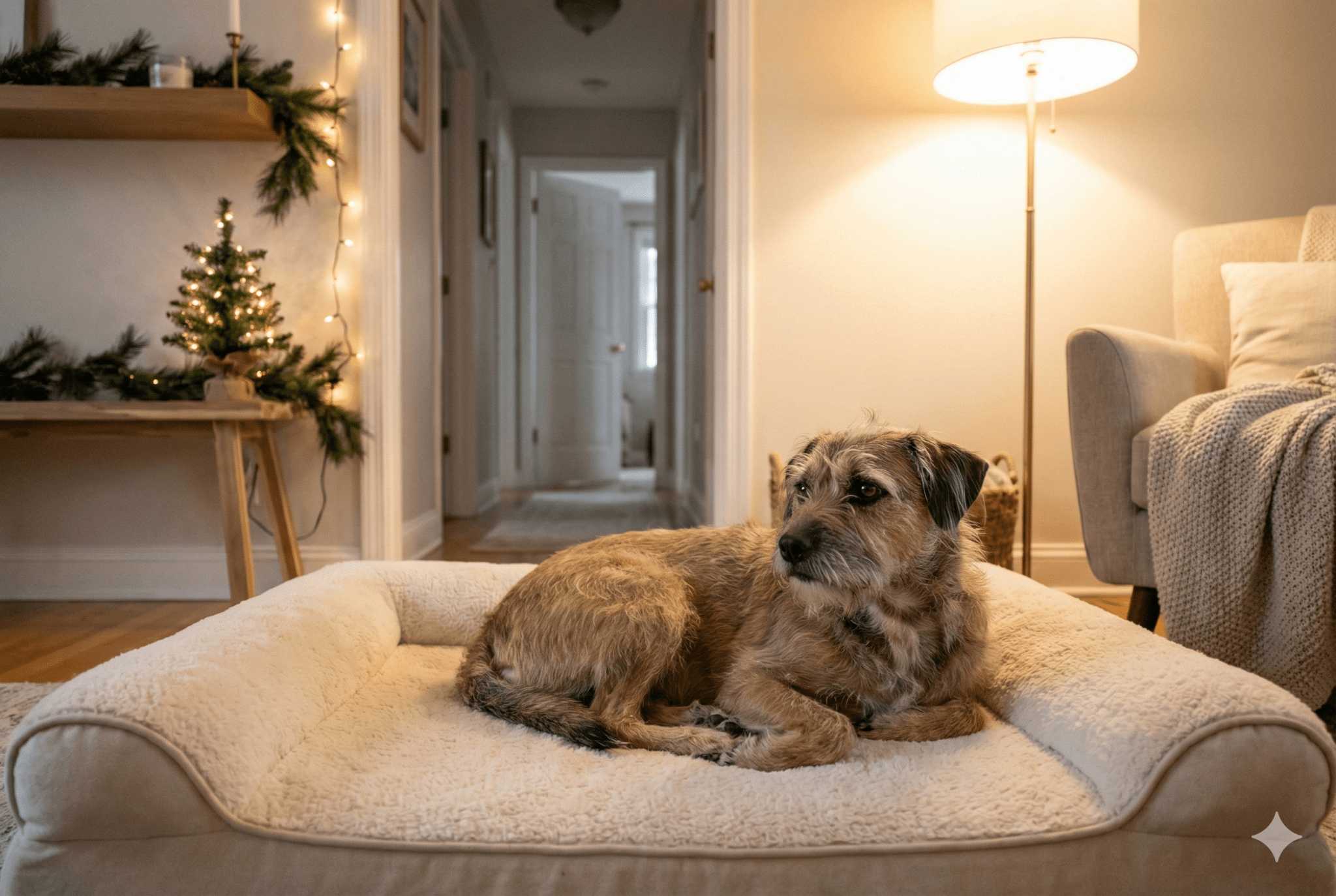
Create safe spaces. Set up calm zones in rooms away from where you'll host. Include your dog's favorite bed, fresh water, toys, and background noise sources.
-
Dog-proof decorations. Move breakable ornaments to upper tree branches. Secure cords. Remove toxic plants. Anchor your tree. Block access to risky areas.
-
Test new tools. If you bought calming supplements, thunder shirts, or other anxiety aids, introduce them now. Don't wait until your dog is already stressed to try something new.
-
Practice routines. If you'll need your dog to settle in their safe space during parties, practice sending them there with positive reinforcement. Build the behavior before you need it.
-
Deep clean now. Get heavy cleaning done before the holidays hit. You won't have time or energy during the chaos. Plus, strong cleaning chemical smells need time to dissipate before stressing your dog.
Three Days Out: Final Details
-
Prep the travel kit (if applicable). More details in the travel section below.
-
Review guest expectations. Send a message to anyone attending: "Just a heads up, we have a dog who gets anxious during gatherings. We've set up a quiet space for them. Please don't go into that room, and please don't feed them anything without asking. Thanks for understanding."
-
Increase exercise. Start ramping up physical activity now. Tired dogs cope better with upcoming stress.
-
Establish feeding schedule accommodations. If your holiday meal conflicts with your dog's normal dinner time, adjust by 30 minutes daily starting now. Gradual shifts prevent digestive upset.
-
Prepare easy meals. Cook and freeze simple meals for yourself. When you're not stressed about your own food, you have more capacity to manage your dog's needs.
Day Before: Last-Minute Checks
-
Exercise heavily. Long walk or vigorous play session. Burn that energy.
-
Final supply check. Verify you have everything you need. Running out for dog food while hosting guests isn't fun.
-
Set up stations. Position water bowls, pee pads (if needed), treat stations, and cleanup supplies strategically.
-
Prep quick-grab bags. Put together a bag with a leash, waste bags, treats, and a water bowl near the door. Grab-and-go setup saves time.
-
Review emergency numbers. Program your vet's emergency line and nearest 24-hour clinic into your phone. Know which facilities are open during holidays.
-
Create a care sheet. Write down your dog's routine, medication schedule, and emergency contacts. Leave it visible. If something happens to you, anyone can step in to help your dog.

During Events
Once guests arrive, execution matters more than perfect plans. Stay flexible and prioritize your dog's well-being over hospitality perfection.
Guest Arrival Management
-
Greet guests outside when possible. This prevents doorbell overload and gives you control over entry.
-
Require calm behavior. Ask guests to avoid loud greetings and excited dog interactions. "Please ignore the dog initially and let them approach you if they choose" sets appropriate expectations.
-
Secure your dog. Use leashes, gates, or closed doors to prevent escape attempts during arrivals. Holiday excitement increases flight risk.
-
Monitor stress signals. Watch your dog's body language during initial arrivals. Panting, pacing, or hiding means they need a break before things escalate.
-
Start guests in a settled area. Direct them away from where your dog is initially. Once everyone arrives and settles, the energy level drops naturally.
Throughout the Event
-
Check in regularly. Visit your dog every 30 minutes if they're separated. Bring water and treats. Offer calm interaction.
-
Maintain routines. Feed meals on schedule. Take walks at normal times. Don't skip basic care because you're busy hosting.
-
Watch food security. Holiday meals mean abundant food opportunities. Keep food out of dog reach. Empty trash regularly. Ask guests not to leave plates unattended.
-
Monitor guest-dog interactions. Some guests ignore your rules. Step in firmly if anyone feeds your dog unsafe foods or overstimulates them.
-
Offer safe participation options. If your dog wants to be part of things, let them observe from behind a baby gate or on a leash. They can be present without being overwhelmed.
-
Take breaks together. Excuse yourself periodically to spend quiet time with your dog away from party action. These mini-resets help both of you.
Managing the Unexpected
-
Escape attempts. Always check who's coming and going through doors. One open door during chaos is all it takes. Keep your dog leashed during peak traffic periods.
-
Guest conflicts. Someone will question your dog management approach. Stand firm. "This is what works for our dog" ends most debates. Don't justify or argue.
-
Behavioral incidents. If your dog has an accident, shows aggression, or exhibits extreme stress, address it immediately. Remove them to their safe space. Assess whether the event needs to end early for everyone's safety.
-
Food stealing. It happens. Don't panic. Know what your dog ate and contact your vet if it's potentially toxic. Keep poison control numbers accessible.
-
Child-dog issues. Children often push boundaries. If a child won't follow rules around your dog, separate them completely. Your dog's safety trumps a child's desire to pet them.
Wind Down Protocol
-
Gradual transition. As guests leave, don't immediately reunite your dog with you if they've been separated. Give them time to decompress first.
-
Post-party inspection. Walk through your home, checking for hazards before giving your dog free access. Dropped food, broken decorations, or spilled drinks need cleanup first.
-
Return to routine. Resume normal schedule immediately after guests leave. Your dog needs predictability restored quickly.
-
Recovery time. The next day, keep activities low-key. Your dog needs to recover from stimulation overload.

Travel Tips
Whether you're bringing your dog or leaving them behind, travel requires specific preparation.
Traveling With Your Dog
Pack their essentials:
-
Food (entire trip supply plus two extra days)
-
Medications and supplements
-
Regular bowls
-
Leash and harness
-
Waste bags
-
Familiar bedding and toys
-
First aid kit
-
Vet records
-
Recent photo (for lost dog situations)
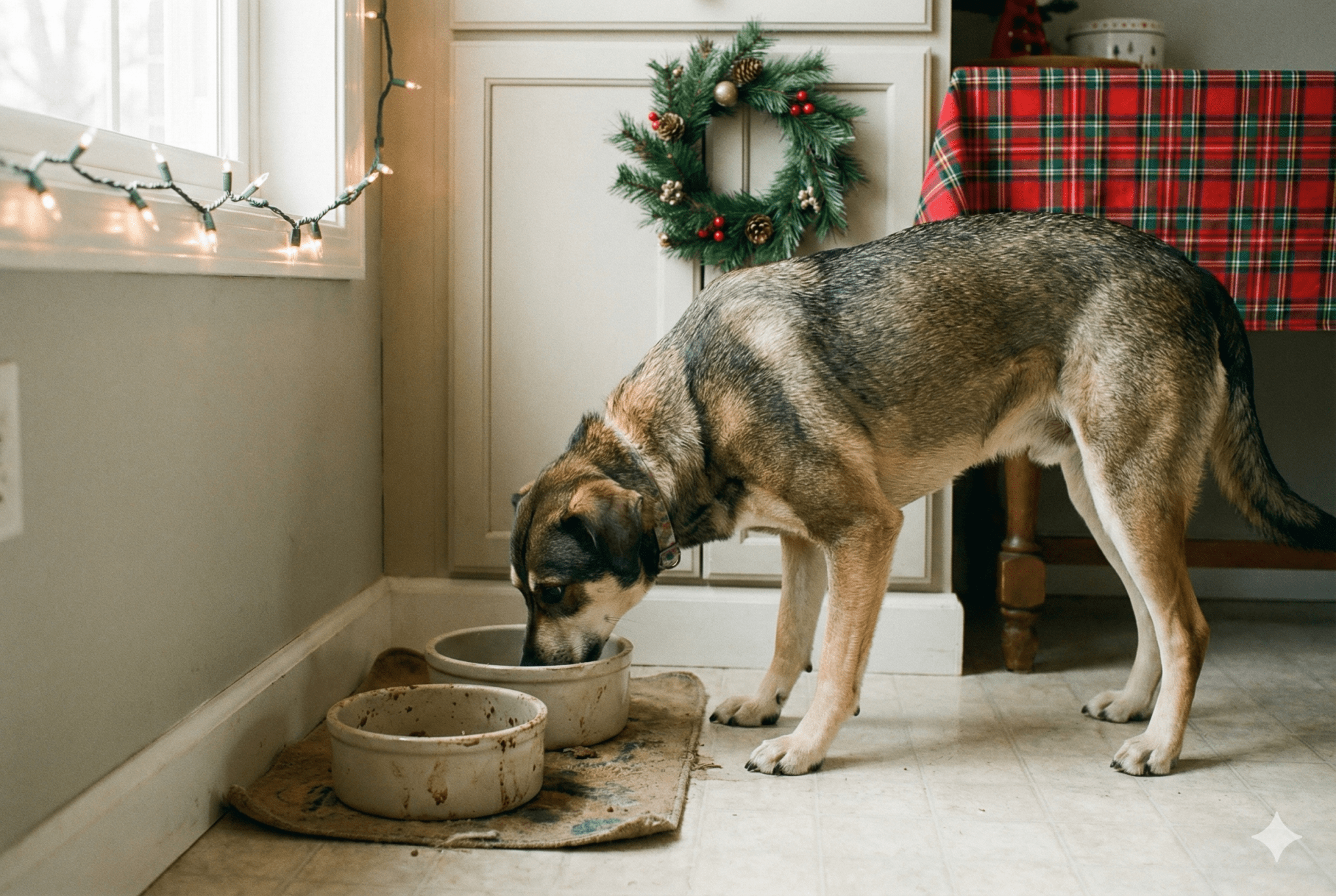
A personalized feeding mat from home helps establish a routine in unfamiliar locations. Browse our complete collection for travel-friendly items that provide comfort away from home.
-
Vehicle safety: Use crates or harnesses to secure your dog during travel. Unsecured dogs become projectiles in accidents. They also distract drivers and can escape when doors open.
-
Break schedule: Stop every 2-3 hours for bathroom breaks, water, and movement. Never leave your dog in the car unattended, even briefly.
-
Accommodation prep: Call ahead to confirm pet policies. Some places say "pet-friendly" but have weight or breed restrictions. Verify specifics.
-
Destination dog-proofing: Upon arrival, dog-proof your space before letting them explore. Check for hazards, secure trash, and remove toxic items.
-
Maintain routine rigorously. Travel is stressful. Routine becomes even more critical. Keep feeding, walking, and sleep schedules as normal as possible.
Leaving Your Dog Behind
Choose care carefully. Whether boarding or using a sitter, select someone trustworthy with good reviews. Visit facilities in person before booking.
Provide detailed instructions. Write everything down:
-
Exact feeding schedule and amounts
-
Medication instructions
-
Exercise needs and routines
-
Behavioral quirks and triggers
-
Emergency contacts
-
Vet information
-
How to reach you
-
Trial run. Board your dog for one night before the actual travel. See how they handle it. Adjust plans if they struggle significantly.
-
Bring comfort items. Send familiar bedding, toys, and a worn t-shirt that smells like you. These help anxious dogs cope.
-
Stay reachable. Make sure whoever is caring for your dog can reach you easily. Check in regularly, but don't overwhelm them with constant contact.
-
Return calmly. When you get home, greet your dog calmly rather than with frantic excitement. Keep reunion energy moderate to prevent overstimulation.
Emergency Planning
-
Research vets at your destination. Know where the nearest emergency vet is before you need it. Save their number in your phone.
-
Pack medical records. Bring vaccination records and any relevant health information. You'll need these if your dog requires vet care away from home.
-
Identify pet-friendly spaces. Find local parks, walking areas, and dog-friendly establishments near where you're staying.
-
Have a backup plan. What happens if your dog can't handle the travel stress? Know where local boarding facilities are. Have numbers for pet shipping services if driving home becomes necessary.
Quick Safety Reminders
Holiday hazards concentrate during peak celebration weeks. Stay vigilant.
Food Hazards to Avoid
-
Chocolate
-
Xylitol (artificial sweetener)
-
Grapes and raisins
-
Onions and garlic
-
Fatty foods (turkey skin, ham fat)
-
Alcohol
-
Macadamia nuts
-
Cooked bones
Décor Dangers
-
Tinsel and garland
-
Glass ornaments
-
Electrical cords
-
Candles
-
Toxic plants (poinsettias, holly, mistletoe)
-
Snow globes (contain antifreeze)
-
Ribbons and bows
Common Accidents
-
Unsecured trees toppling
-
Dogs drinking tree water
-
Escape through open doors
-
Burns from candles
-
Ingestion of wrapping paper and tape
-
Salt and de-icer poisoning from winter walks
Emergency Response
Keep these numbers accessible:
-
Your vet
-
Emergency vet clinic
-
Pet Poison Helpline: (855) 764-7661
-
ASPCA Poison Control: (888) 426-4435
Checklist Format
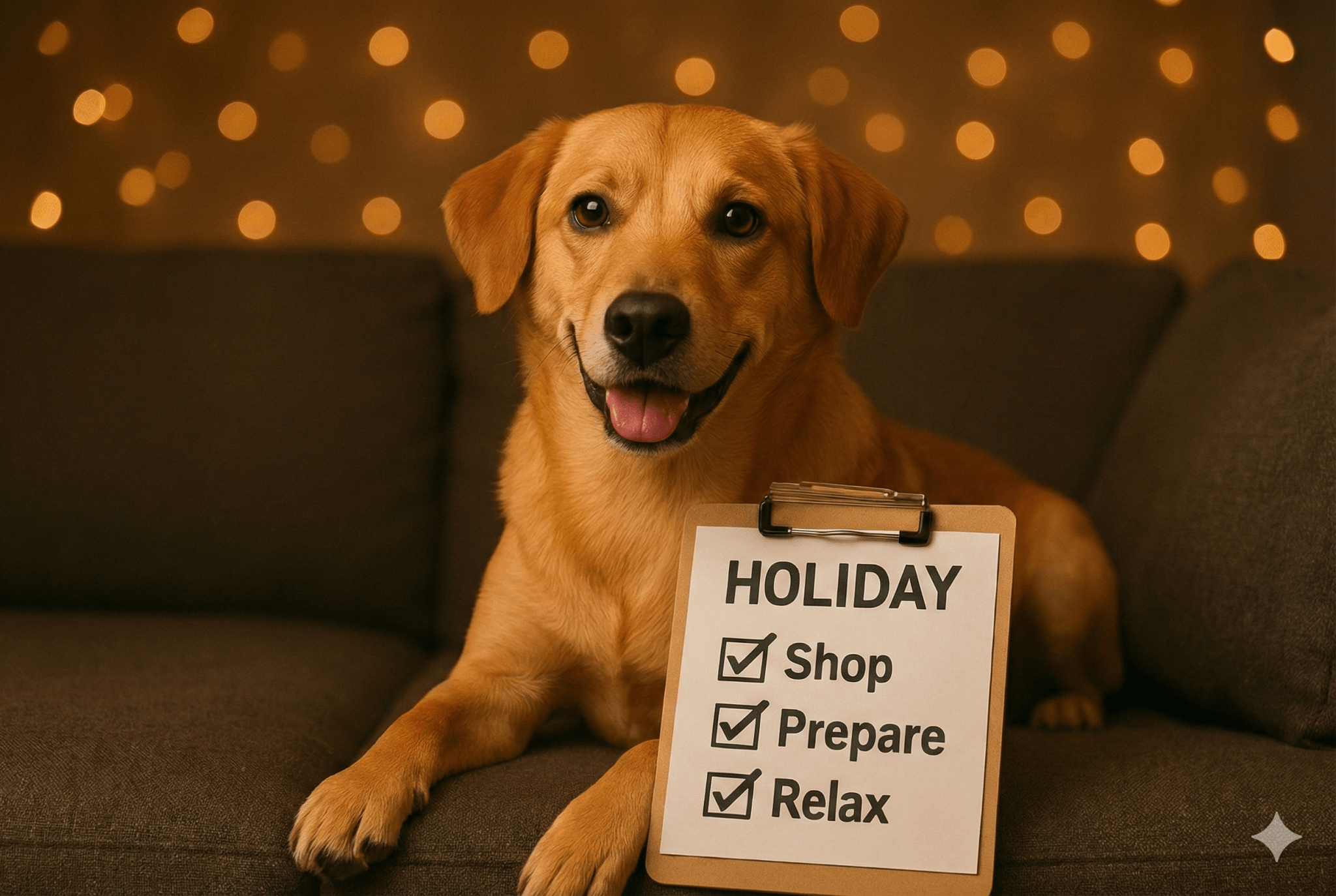
Print this checklist and post it where you'll see it:
Two Weeks Before:
☐ Calendar review
☐ Stock supplies
☐ Schedule vet appointment
☐ Update ID tags
☐ Arrange pet care (if traveling without dog)
One Week Before:
☐ Set up safe spaces
☐ Dog-proof decorations
☐ Test calming tools
☐ Practice safe space routine
☐ Deep clean
Three Days Before:
☐ Prep travel kit
☐ Message guests about dog rules
☐ Increase exercise
☐ Adjust feeding schedule gradually
☐ Cook easy meals for yourself
Day Before:
☐ Heavy exercise session
☐ Final supply check
☐ Set up stations (water, cleanup, treats)
☐ Prep quick-grab bags
☐ Review emergency numbers
☐ Create care sheet
Event Day:
☐ Morning routine maintained
☐ Safe space ready
☐ Check-ins every 30 minutes
☐ Maintain feeding schedule
☐ Monitor guest interactions
☐ Post-party inspection
FAQs
What's the single most important thing for holiday dog survival?
Maintaining routine. Everything else supports this core principle. When feeding, walking, and sleep schedules stay consistent, dogs handle other changes better.
How do I handle relatives who don't respect my dog rules?
Be direct. "Please don't feed the dog. It's not negotiable." Don't worry about seeming rude. Your dog's health matters more than someone's feelings about not sharing their plate.
Should I medicate my anxious dog for holiday events?
Discuss with your vet. For dogs with severe anxiety, medication can be appropriate and humane. It's not "cheating" or over-medicating. It's the medical management of a real condition.
What if I can't afford boarding during travel?
Look into trusted friends or family who can pet sit. Check Rover or similar services for in-home sitting. Some people trade pet-sitting services. Get creative before leaving your dog in suboptimal care.
How do I know if I'm over-planning?
If planning creates more stress than the events themselves, scale back. The goal is to reduce chaos, not create perfect execution. Good enough is genuinely good enough.
Can I still enjoy holidays while managing my dog's needs?
Absolutely. Taking care of your dog doesn't mean sacrificing your enjoyment. It means building structures that allow both of you to thrive. Guilt-free celebration happens when your dog is well cared for.
What do I do if everything goes wrong?
Take a breath. Address immediate safety concerns. Call your vet if needed. Recognize that one bad holiday doesn't predict all future holidays. Learn from what didn't work and adjust next time.
Conclusion
Surviving the holidays with a dog isn't about perfection. It's about preparation, flexibility, and prioritizing well-being over perfect execution.
You'll forget something. Plans will change. Your dog might still struggle despite your best efforts. That's okay. You're doing your best with the tools you have.
Start preparing early. Maintain core routines. Respect your dog's limits. These three principles carry you through almost anything the holidays throw at you.
The season is temporary. The relationship with your dog is permanent. Make choices that honor that priority.
Holiday survival hub at ShaggyChic.com 🐶 | Follow @shaggychicinc ✨
dog holiday survival guide, holiday dog tips