
How to Calm an Anxious Dog During the Holidays
 That pacing, panting, and hiding aren't dramatics — they're real stress signals that respond to specific comfort tools, safe retreats, and smarter hosting strategies.
Holiday anxiety in dogs isn't dramatic or obvious. It's subtle shifts in behavior that accumulate until your normally calm pup is pacing at midnight, unable to settle.
Some dogs wear anxiety clearly — trembling, hiding, excessive barking. Others show it through decreased appetite, upset stomach, or withdrawal. Every dog expresses stress differently, but all anxious dogs need the same thing: tools to cope and space to decompress.
You can't eliminate all holiday stressors. Guests will arrive. Schedules will shift. Decorations will appear. But you can give your dog resources to manage these changes without falling apart.
We're covering how to spot anxiety early, which comfort tools actually work, and how to host gatherings that don't send your dog into meltdown mode.
Signs of Stress
Recognizing anxiety early prevents escalation. Small stress signals are easier to address than full-blown panic.
Physical Stress Signals
Dogs communicate stress through body language long before behavior becomes problematic.
-
Panting when not hot or exercised indicates stress or discomfort. If your dog pants while lying in a cool room, something's bothering them.
-
Excessive yawning isn't tiredness. Dogs yawn to self-soothe during stress. Multiple yawns in quick succession signal significant discomfort.
-
Lip licking and drooling outside of food contexts show nervousness. Watch for repeated tongue flicks across the nose.
-
Whale eye — when dogs show the whites of their eyes — appears when they're tracking threats while trying not to move their head. It's a clear fear signal.
-
Tucked tail between legs or pressed against the body indicates fear or submission. Confident, comfortable dogs carry tails in neutral or happy positions.
-
Pinned back ears flatten against the head during stress. Compare this to their normal ear position to spot the difference.
-
Trembling or shaking happens during fear, cold, or excitement. Context matters. Holiday trembling is usually fear-based.
-
Excessive shedding increases during stress. If your dog's coat seems to be falling out more than usual, anxiety could be the cause.
Behavioral Stress Indicators
How dogs act reveals as much as how they look.
-
Pacing and restlessness mean they can't settle. They walk around repeatedly, checking windows, circling their bed without lying down.
-
Hiding under furniture or in closets signals overwhelm. Dogs seek enclosed spaces when they feel unsafe.
-
Excessive barking or whining increases with anxiety. Each sound that wouldn't normally bother them triggers a reaction.
-
Destructive behavior — chewing furniture, scratching doors, destroying belongings — often stems from anxiety rather than spite. Stressed dogs need an outlet.
-
House training regression happens when stress overrides training. Previously reliable dogs have accidents when anxious.
-
Decreased appetite is common during high-stress periods. Food holds no interest when they're focused on potential threats.
-
Excessive clinginess makes them follow you everywhere, even to the bathroom. They can't stand being separated.
-
Avoidance of people, rooms, or activities they normally enjoy indicates that something about the situation feels threatening.
-
Hypervigilance means constantly scanning the environment, unable to relax. They watch doors, windows, and hallways obsessively.
Subtle Signs Often Missed
Some anxiety indicators are so subtle they're easy to overlook.
-
Changes in sleep patterns — sleeping more or less than usual — reflect stress's impact on their system.
-
Increased grooming or licking, especially of paws and legs, becomes a self-soothing behavior. Excessive licking can create hot spots.
-
Stiff body posture with tight muscles shows tension. Relaxed dogs look loose and fluid. Tense dogs appear frozen.
-
Refusal to take treats from someone they normally accept them from signals high stress. When anxiety overrides food motivation, it's serious.
-
Displacement behaviors like scratching when not itchy or sniffing the ground intensely during stressful interactions indicate internal conflict.
Context Matters
One stress signal doesn't confirm anxiety. Look for clusters. Three or more signs appearing together warrant intervention.
Also consider duration. Brief stress during a doorbell ring is normal. Prolonged stress that continues after the trigger ends needs attention.
Comfort Tools
Physical tools and environmental changes help anxious dogs cope with holiday stress. These aren't magic solutions, but they provide measurable relief.
Safe Space Creation
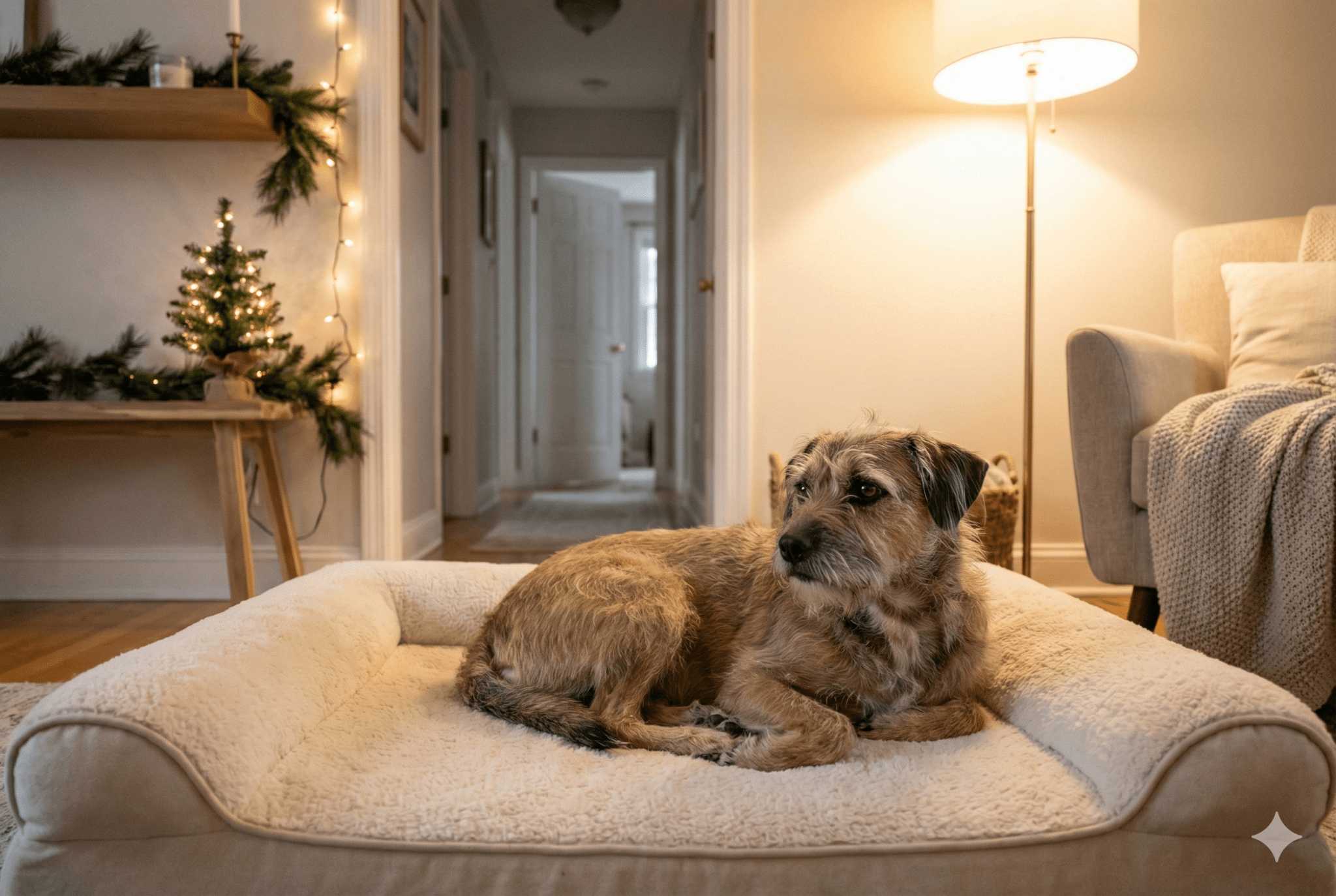
Every anxious dog needs a designated retreat where they feel completely secure.
-
Location selection matters. Choose a room away from the main activity areas. Spare bedrooms, offices, or walk-in closets work well. The space should have a door you can close during peak stress times.
-
Essential elements include:
-
A familiar dog bed they already love. A custom bed with their photo reinforces "this is MY space." Memory foam provides physical comfort while familiarity offers emotional security.
-
Soft lighting from lamps rather than harsh overhead lights creates a calm atmosphere.
-
Background noise — TV, radio, or white noise machine — masks sudden sounds from the rest of the house.
-
Water and treats are within easy reach, so they don't need to leave their safe space for basic needs.
-
Their favorite toys and comfort items.
-
Make it inviting by spending time there with your dog before stress events. Build positive associations. Feed special treats there. Play calm games there.
Anxiety Wraps and Thunder Shirts
These snug-fitting garments apply gentle, constant pressure similar to swaddling a baby. Many dogs find this pressure calming.
-
How they work: The pressure may release endorphins or simply provide sensory input that helps dogs feel more grounded and less reactive.
-
When to use: Put them on 15-30 minutes before anticipated stress events. They work best as preventive tools rather than reactive solutions.
-
Not for every dog: Some dogs hate the restriction. Try them before holiday chaos to assess whether your dog tolerates and benefits from them.
Calming Music and White Noise
Sound therapy reduces anxiety by masking triggering noises and providing soothing auditory input.
-
Classical music specifically composed for dogs (yes, this exists) uses tempos and frequencies that research shows can calm canines. Regular classical music works too.
-
White noise machines block out doorbell rings, footsteps, and conversation sounds that spike anxiety.
-
Nature sounds like rain or ocean waves provide a non-threatening background noise.
Play these continuously in your dog's safe space and at low to moderate volume in shared spaces.
Pheromone Diffusers
Synthetic versions of calming pheromones that dogs naturally produce help some anxious dogs feel more secure.
-
How to use: Plug diffusers in rooms where your dog spends the most time. They work subtly over time, not instantly. Start using them two weeks before peak holiday stress for best results.
-
Realistic expectations: These work for some dogs and do nothing for others. They're worth trying but aren't guaranteed solutions.
Calming Supplements
Several over-the-counter supplements may reduce anxiety:
-
L-theanine promotes relaxation without sedation.
-
Chamomile has mild calming properties.
-
Melatonin helps with sleep-related anxiety.
-
CBD products show promise for some dogs, but quality varies wildly between brands.
-
Always consult your vet before starting supplements. They can interact with medications or cause problems in dogs with certain health conditions.
Prescription Medications
For dogs with severe anxiety, prescription anti-anxiety medications may be necessary. These aren't defeat or over-medication. They're an appropriate medical intervention for a real condition.
Talk to your vet well before the holidays. Some medications need trial periods to find the right dose. Others work only if given before stress events.
Interactive Toys and Puzzles
Mental stimulation tires dogs and redirects anxious energy into productive activity.
-
Puzzle feeders make dogs work for treats, engaging their brain.
-
Frozen Kong toys stuffed with peanut butter (xylitol-free) or yogurt provide extended engagement.
-
Snuffle mats hide treats in fabric folds, tapping into natural foraging instincts.
Use these during high-stress times to give anxious dogs something positive to focus on.
Comfort Items With Your Scent
Your smell comforts your dog. Leave worn t-shirts or pillowcases in their safe space. This helps when they're separated from you during parties or when you're busy hosting.
Browse our full collection for items that support anxiety management. Custom blankets with your dog's photo provide visual comfort. Personalized feeding mats establish calm routines. Small details create big impacts for anxious dogs.
Hosting With Dogs
Holiday gatherings are prime anxiety triggers. How you manage parties determines whether your dog copes or melts down.
Pre-Party Preparation
Don't wait until guests arrive to think about your dog. Preparation hours earlier sets them up for success.
-
Exercise heavily before guests arrive. A tired dog is a calmer dog. Take a longer walk or play vigorous fetch. Burn off excess energy that might otherwise fuel anxiety.
-
Feed meals on schedule before parties start. A full stomach helps them settle. Hunger compounds stress.
-
Set up a safe space early so it's ready when they need it. Turn on background noise. Make sure the water is fresh.
-
Consider pre-treating with calming supplements if your vet has approved them. These need time to take effect.
Guest Arrival Management
The moment guests arrive is often the highest stress point.
-
Greet guests outside if possible. This prevents your dog from racing to the door every time the bell rings.
-
Ask guests to ignore your dog initially. Eye contact, reaching out, and excited greetings overwhelm anxious dogs. Have guests come in calmly, settle into spaces, and let your dog approach on their terms if they choose.
-
Keep your dog on a leash during initial arrivals if they're reactive. This gives you control and prevents them from bolting toward or away from guests.
-
Use baby gates to create barriers between your dog and main party areas. They can see what's happening without being in the middle of chaos.
During the Gathering
Once the party is underway, ongoing management prevents escalation.
-
Check on your dog every 30 minutes. Don't assume they're fine because they're quiet. Anxious dogs often shut down rather than act out.
-
Watch for stress signals described earlier. Intervene early when you spot them.
-
Limit guest interaction. Some guests won't respect boundaries about not petting or feeding your dog. Position yourself as a buffer or keep your dog in their safe space.
-
Maintain their routine as much as possible. If their normal dinner time falls during the party, feed them anyway. Routine provides stability.
-
Give breaks from stimulation. Even if your dog seems to be handling the party okay, take them to their calm space for 15-minute breaks every hour.
Managing Children
Kids are often the biggest anxiety trigger for dogs. Their unpredictable movements, loud noises, and tendency to chase or grab create significant stress.
-
Set firm rules before children arrive:
-
No running near the dog
-
No reaching for or petting without permission
-
No going into the dog's safe space
-
No feeding the dog anything
-
Supervise constantly. Never leave children and anxious dogs together unsupervised, even briefly.
-
Teach children a proper approach. If your dog tolerates interaction, show kids how to approach calmly, let the dog come to them, and pet gently.
Post-Party Recovery
After guests leave, help your dog decompress.
-
Return the environment to normal as quickly as possible. Put away decorations that were just for the party. Restore furniture to its usual positions.
-
Spend quiet time with your dog. They've been stressed and need reconnection.
-
Resume normal routine immediately. Regular schedule returns stability.
-
Monitor for delayed stress reactions. Some dogs seem fine during events but show anxiety symptoms hours later.
Know When to Skip It
Sometimes the kindest choice is removing your dog from the situation entirely.
-
Board them during major parties if their anxiety is severe. This isn't failure. It's recognizing their limits and protecting their well-being.
-
Use pet sitters who can keep them at a friend's house during gatherings.
-
Ask a family member to take them for the day.
Your dog doesn't need to attend every celebration. Their mental health matters more than their presence at parties.
FAQs
How do I know if my dog's anxiety needs professional help?
If anxiety interferes with basic functioning — they won't eat, sleep, or potty normally — see a vet. If stress signals persist days after triggers end, that's also concerning. Start with your vet, who can refer you to a veterinary behaviorist if needed.
Do calming treats actually work?
They work for some dogs and not others. Effects are typically mild. They're worth trying but shouldn't be your only strategy. Combine them with environmental management and behavioral interventions.
Should I comfort my anxious dog or ignore the behavior?
Comfort them. The old advice about "reinforcing fear" has been debunked. You can't reinforce an emotion. Providing comfort helps them feel safer. Just don't go overboard with frantic reassurance that adds to the chaos.
Can I train anxiety away?
Not entirely, but you can teach coping skills and build confidence through positive reinforcement training. Work with a certified dog trainer who uses force-free methods. Training helps but isn't a complete solution for clinical anxiety.
How long do holiday anxiety symptoms last?
Most dogs return to normal within 2-3 days after major triggers end. If symptoms persist longer, schedule a vet visit to rule out medical issues or discuss anxiety medication.
Is it better to expose anxious dogs to stressors or protect them?
Gradual, controlled exposure at intensities they can handle builds resilience. Overwhelming exposure makes anxiety worse. This is called flooding and should be avoided. Always keep exposure below their panic threshold.
Can diet affect anxiety?
Yes. Some dogs are sensitive to certain ingredients. Deficiencies in B vitamins or omega-3 fatty acids can contribute to anxiety. Discuss diet with your vet if anxiety is persistent.
Conclusion
Anxious dogs during the holidays aren't being difficult or dramatic. They're genuinely struggling with changes to their environment and routine. Your job isn't to force them to "get over it." It's to provide tools and support that help them cope.
Some dogs need minimal intervention — a quiet room and a familiar bed do the trick. Others need combinations of supplements, medication, environmental management, and behavioral strategies. There's no shame in doing whatever works for your specific dog.
The holidays don't last forever. Get through them with your dog's well-being intact. That's success. Perfect behavior isn't the goal. Managing stress is.
Start preparing now. Don't wait until your dog is already overwhelmed. Prevention beats intervention every time.
Calm begins at home at ShaggyChic.com 🐶 | Follow @shaggychicinc ✨
calm anxious dog holidays, dog anxiety tips