

Lucky Dogs & Legends: The Mythology of Canine Good Fortune

Long before dogs earned the title "man's best friend," they were guardians of the afterlife, bringers of prosperity, and sacred omens of fortune.
Dogs have walked beside humans for at least 15,000 years.
In that time, they've become more than companions. They've become symbols. Across continents and centuries, cultures have woven dogs into their spiritual fabric, assigning them roles as protectors, messengers, and harbingers of luck. Some societies honored them as divine gatekeepers. Others believed they carried souls safely into the afterlife.
This mythology didn't emerge randomly. It reflects something deeper about the human-canine bond, something that transcends practicality and enters the realm of the sacred. The stories we've told about dogs reveal what we've always believed: these creatures carry fortune in their wake.
Dogs in the Chinese Zodiac
The Chinese zodiac assigns deep meaning to those born in the Year of the Dog. Unlike Western astrology's monthly divisions, this system operates on a 12-year cycle, with each year represented by an animal whose characteristics shape the personalities and fortunes of those born under its influence.
The Dog's Position
Dog ranks eleventh in the zodiac order. According to legend, the Jade Emperor hosted a race to determine the animals' rankings. The Dog, an excellent swimmer, should have finished near the front. But the water felt so refreshing that the Dog forgot about the competition entirely, pausing to bathe in the celestial river while other animals raced ahead.
This origin story captures something essential about the Dog's character: enjoyment of life over competition, sincerity over ambition.
Personality Traits
People born in Dog years (1958, 1970, 1982, 1994, 2006, 2018, 2030) are believed to possess specific qualities:
|
Trait |
Expression |
|
Loyalty |
Fiercely devoted to friends and family |
|
Honesty |
Straightforward, sometimes to a fault |
|
Justice |
Strong moral compass, fairness-oriented |
|
Caution |
Takes time to trust, but once committed, unwavering |
|
Protectiveness |
Natural guardian of those they love |
The Dog is associated with the Earth element, which contributes stability, reliability, and groundedness. In Chinese philosophy, Dogs represent moral integrity and the kind of loyalty that doesn't waver under pressure.
Lucky Symbols for Dog Years
Chinese tradition assigns specific lucky elements to each zodiac sign:
-
Lucky colors: Red, green, purple
-
Lucky numbers: 3, 4, 9
-
Lucky directions: East, southeast, south
-
Lucky flowers: Rose, orchid
These aren't arbitrary assignments. Red symbolizes vitality and protection. Green represents growth and renewal. The numbers correspond to phonetic associations with prosperity in Mandarin.
Kukur Tihar: Nepal's Sacred Dog Festival

Once a year in Nepal, something remarkable happens. Dogs, including strays wandering the streets, become the center of an entire nation's devotion.
The Festival of Lights
Kukur Tihar falls on the second day of Tihar, Nepal's five-day Festival of Lights, celebrated each autumn. While each day honors different beings (crows, cows, oxen, and siblings also receive their days), Kukur Tihar belongs entirely to dogs.
On this day, Nepali Hindus believe that honoring dogs pleases Yama, the god of death, and ensures safe passage for souls journeying to the afterlife. Dogs are considered Yama's messengers and gatekeepers, watching over the threshold between worlds.
The Rituals
The celebrations follow specific traditions:
-
Tilaka: A red mark made from vermillion powder, rice, and yogurt is applied to each dog's forehead, blessing them as sacred beings.
-
Garlands: Marigold and globe amaranth flowers are draped around their necks, the same flowers used to honor deities.
-
Feasting: Dogs receive offerings of meat, eggs, milk, and special treats. The food isn't ordinary scraps but intentional offerings of gratitude.
Every dog participates. Pet dogs. Police dogs. Street dogs who've never known an owner. On Kukur Tihar, all are sacred.
The Mahabharata Connection
The festival draws meaning from an ancient story in the Mahabharata. When the hero Yudhishthira and his brothers journeyed toward heaven, all perished along the way except Yudhishthira and a dog who had accompanied them.
At heaven's gates, Indra welcomed Yudhishthira but told him the dog couldn't enter. Yudhishthira refused. He would not abandon his loyal companion, even for paradise.
The dog then revealed itself as Yama in disguise. Yudhishthira's compassion had been tested, and his faithfulness to the dog opened heaven's gates.
This story encapsulates the festival's message: loyalty to dogs reflects the highest human virtue.
Guardian Lions and the Mythology of Protection
Walk past any Chinese temple, palace, or traditional business, and you'll likely encounter a pair of stone creatures flanking the entrance. Despite being called "Foo Dogs" in the West, these are actually stylized lions, and their mythology runs deep.
Origin of the Guardian Lions
Lions weren't native to China. They entered Chinese knowledge through the Silk Road, brought as exotic gifts to Han Dynasty emperors around 200 BCE. The animal's majesty captivated the imperial court, and lions quickly became symbols of power and protection.
Buddhist influence amplified this symbolism. In Buddhist teaching, the truth of the Dharma is said to roar like a lion, quieting all other sounds. Lions became protectors of sacred spaces, guardians of the threshold between physical and spiritual realms.
Male and Female Pairs
Guardian lions always appear in pairs, representing yin and yang:
|
Guardian |
Position |
Symbol |
Meaning |
|
Male |
Right side (viewer's perspective) |
Paw on embroidered ball |
Material world, unity, protection |
|
Female |
Left side |
Paw on cub |
Spirit, nurturing, family continuation |
The male's ball represents the Earth and imperial unity. The female's cub represents the cycle of life and the protection of future generations. Together, they create balance.
Spiritual Function
These guardians weren't merely decorative. They served active spiritual roles:
-
Cleansing negative energy: The lions were believed to neutralize "poison arrows" (shar chi), the negative force from sharp corners, crowds, and jarring structures.
-
Discerning intention: Guardian lions possess perception, the ability to identify those with malicious intent and turn them away.
-
Attracting prosperity: For businesses, the lions drive away mischief while drawing satisfied customers.
The placement matters according to feng shui principles. Positioned incorrectly, the lions lose their protective power. Positioned correctly, they ensure only positive energy crosses the threshold.
Lucky Dog Breeds Across Cultures

Different civilizations didn't just honor dogs generally. They attributed special fortune to specific breeds.
Shih Tzu: The Lion Dog of China
In ancient China, the Shih Tzu wasn't merely a pampered pet. These small dogs were living symbols of divine blessing.
Their name means "lion dog," connecting them to Buddhist mythology where lions protect sacred spaces. Chinese emperors kept Shih Tzus within the Forbidden City, believing their presence brought fortune, wealth, and spiritual protection. Owning one signified a connection to the divine.
Tibetan Mastiff: Walking Fortress of Luck
The Tibetan Mastiff served as more than a guard dog for nomadic tribes and monasteries. These massive animals were believed to ward off evil spirits from both physical and spiritual realms.
Their deep bark was considered a protective aura in itself. Tibetan tradition held that with a Tibetan Mastiff watching over you, misfortune wouldn't dare approach.
Saluki: The Blessed Hunters
In pre-Islamic Arab culture, the Saluki was seen as touched by divine favor. These swift, graceful hunting dogs were believed to bring luck simply through their presence. Touching a Saluki was considered an act of receiving a blessing.
Dalmatian: The Traveler's Charm
Romani and Balkan folklore assigned protective qualities to Dalmatians. Their spotted coats were thought to ward off evil spirits, and they were considered lucky companions for travelers. This protective mythology later merged with their role as firehouse dogs, guardians against disaster.
Basenji: The Silent Sacred One
The Basenji, originating in Central Africa, was regarded by tribes like the Azande as bringing spiritual protection and harmony. Their unique inability to bark (they yodel instead) gave them an otherworldly quality. Some believed they kept evil spirits at bay through their very presence.
Color Symbolism in Dog Folklore
Across cultures, a dog's color often determined its perceived magical properties.
-
Golden/Yellow dogs: Associated with prosperity, wealth, and abundance. The color mirrors gold coins and sunlight, both symbols of fortune.
-
White dogs: Connected to romance, purity, and spiritual matters. In some traditions, white dogs were considered messengers from the spirit world.
-
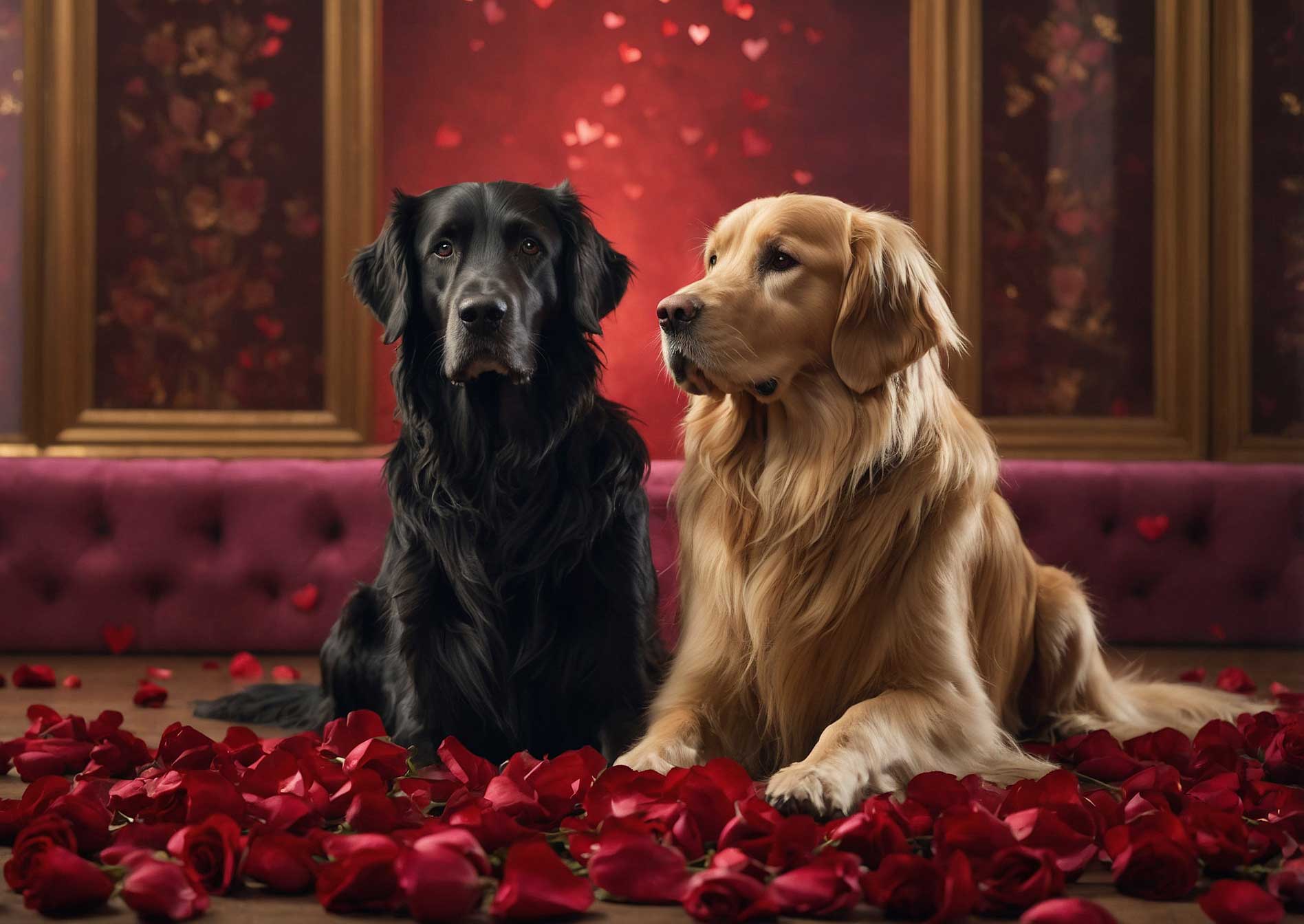
Black dogs: Perhaps the most complex symbolically. While some European folklore associated black dogs with death omens, other traditions saw them as powerful protectors of hearth and home. The Black Dog of Hanging Hills in Connecticut, for example, brings good luck on first sighting.
-
Red/Brown dogs: Often associated with warmth, loyalty, and domestic happiness. These earthy tones connected dogs to the stability of home and family.
Dogs as Afterlife Guides

The connection between dogs and death appears across nearly every ancient culture. Rather than being morbid, this association reflects dogs' role as protectors who accompany their humans everywhere, even beyond life itself.
Anubis: Egypt's Jackal-Headed Guide
The Egyptian god Anubis, depicted with a jackal's head, presided over mummification and guided souls through the underworld. Jackals frequented cemeteries, leading ancient Egyptians to associate them with the transition between life and death.
Anubis wasn't fearsome. He was a guide, ensuring safe passage for souls on their journey. Dogs served this role because they were trusted: who better to lead you through unknown territory than the companion who protected you in life?
Cerberus: The Three-Headed Guardian
Greek mythology placed Cerberus, the three-headed dog, at the gates of Hades. His role wasn't to torment but to maintain order, preventing the living from entering the realm of the dead and the dead from escaping.
This guardian function mirrors the earthly role dogs play: watching the threshold, determining who enters, protecting what lies within.
Yama's Hounds: Hindu Gatekeepers
In Hindu tradition, the god Yama keeps two four-eyed dogs named Shyama and Sharvara. These dogs guard the gates between worlds, watching over souls as they transition.
The "four eyes" refer to markings above their actual eyes, suggesting spiritual sight that perceives beyond physical reality. They see intention, karma, and truth.
Modern Expressions of Ancient Beliefs
These mythologies haven't disappeared. They've evolved into contemporary expressions of the same fundamental beliefs.
Feng Shui Dog Placement
Modern feng shui practitioners still recommend dog imagery for protection and luck. Small guardian lion statues at doorways, dog figurines facing entry points, and artwork depicting loyal dogs all serve to channel the same protective energy ancient cultures sought.
The Second Day of the Chinese New Year
Chinese tradition designates the second day of the Chinese New Year as the birthday of all dogs. On this day, people take special care to be kind to dogs, echoing the ancient belief that dogs bring fortune when honored.
Dog-Themed Good Luck Charms
From Japanese maneki-inu (beckoning dogs) to Western lucky dog figurines, the belief in canine fortune persists. These objects serve the same function as ancient talismans: inviting the protective, prosperous energy associated with dogs.
Honoring Your Own Lucky Dog
You don't need to wait for Kukur Tihar or a zodiac year to honor the mythology surrounding your dog. The ancients understood something we sometimes forget: the dog sleeping at your feet carries millennia of symbolic weight.
Shaggy Chic's Custom Pet Photo Acrylic Plaque transforms your dog's image into a modern tribute, the kind of lasting memorial ancient cultures created for their sacred animals.
For a wearable connection to your canine companion, a Personalized Pet Photo Hoodie keeps their image close, a contemporary version of the protective talismans people have worn for centuries.
And for those who want to honor their dog's place in the home, a Custom Pet Portrait Cartoon Framed Poster creates the kind of artistic tribute once reserved for temple guardians and imperial companions.
Conclusion
Dogs have been lucky for humans since before we had words for luck. They guarded our ancestors' thresholds, accompanied souls into the afterlife, and symbolized the virtues we most wanted to embody: loyalty, protection, and unconditional devotion.
The mythology surrounding canine good fortune isn't primitive superstition. It's recognition of something real. Dogs do make our lives better. They do protect us. And perhaps, in ways we don't fully understand, they do bring fortune simply by being present.
What ancient belief does your dog embody? Explore Shaggy Chic's collection of custom pet portraits, personalized accessories, and memorial keepsakes to honor the lucky dog in your life.
FAQs
What does the Year of the Dog symbolize in the Chinese zodiac?
The Dog represents loyalty, honesty, and justice. People born in Dog years are considered faithful, protective, and morally grounded. The Dog is associated with the Earth element, contributing stability and reliability.
What is Kukur Tihar, and when is it celebrated?
Kukur Tihar is Nepal's dog worship festival, celebrated on the second day of the five-day Tihar festival each autumn (typically October or November). All dogs, including strays, receive flower garlands, sacred tilaka marks, and special food offerings.
Why are Foo Dogs placed at entrances?
Foo Dogs (actually stylized lions) are believed to protect buildings from negative spiritual influences and harmful intentions. They cleanse negative energy, discern good from bad visitors, and attract prosperity. Correct placement according to feng shui principles activates their protective power.
Which dog breeds are considered lucky?
Several breeds have luck associations: Shih Tzus (Chinese divine blessing), Tibetan Mastiffs (spiritual protection), Salukis (Arab divine favor), Dalmatians (traveler protection), and Basenjis (African spiritual harmony). Color also matters, with golden dogs associated with prosperity and white dogs with purity.
Why are dogs connected to the afterlife in mythology?
Dogs appear as afterlife guides across cultures because they're trusted protectors and loyal companions. Ancient peoples believed the same animal that guarded them in life would naturally guide them through death. This includes Egyptian Anubis, Greek Cerberus, and Hindu Yama's hounds.